Bilocation
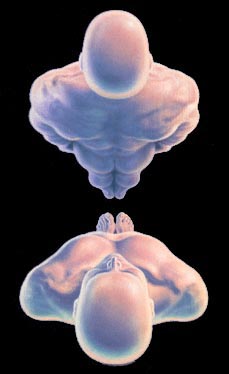
The appearance of a person in two distant places at once.
Said to be a physical — rather than spiritual — phenomenon, bilocation in most instances is said to be involuntary and not to have been directed by the individual concerned in terms of time or space.
The double may appear in solid or ghostly form, and usually acts strangely or mechanically and does not respond when spoken to. It can also be an object existing in two places at the same time.
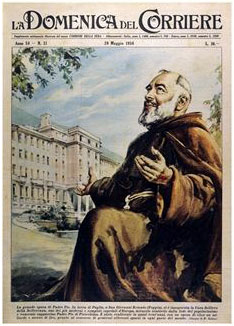
Although uncommon, bilocation — sometimes multilocation — is an ancient phenomenon. It is claimed to have been experienced, and even practiced by will, by many mystics, monks and other holy figures through the ages, including famous Christian saints such as St. Martin de Porres, St. Severus of Ravenna, St. Gerard Majella, St. Anthony of Padua, St. Ambrose of Milan, Padre Pio of Italy, as well as Pope Cyril VI of Alexandria, Egypt.
In one instance, in 1774, St. Alphonsus Liguori is said to have gone into a trance while preparing for Mass. When he came out of the trance he reported that he had visited the bedside of the dying Pope Clement XIV. His presence is then said to have been confirmed by those attending the Pope despite his being four days travel away, and not appearing to have left his original location.
A pioneer psychical researcher, Frederic W. H. Myers, one of the founders of the Society for Psychical Research in England, along with others collected and studied reports of bilocation, but the phenomenon has received little interest in modern times.
See Out-of-body Experiences, Doppelgänger, Altered State of Consciousness, ESP, Seance, Asport, Rappings, Automatic Writing, Findhorn, Glastonbury Scripts, Theosophy, Psychic Archaeology, British Society for Psychical Research, Parapsychology, Poltergeist, Spiritualism, The Chakra Store, Mystic Gifts and Charms - New Age Gift Shop & Wicca and Pagan Supplies, Love Spells -- Use these powerful love spells to help you find and keep your true love, The Tarot Store, Divination & Scrying Tools and Supplies, Unique Amulets, Talismans, Good Luck Charms, and Love Tokens, Powerful Witch Doctor Spell Kits, Powerful Spells - Cast by Andreika the Witch, Webmasters Make $$$, AzureGreen - Celebrating All Paths to the Divine, ISIS - Tools for Your Soul's Journey, and The Pyramid Collection - Myth, Magick, Fantasy and Romance.
Sources: (1) Shepard, Leslie (editor), Encyclopedia of Occultism and Parapsychology, Thomson Gale; (2) Dictionary of the Occult, Caxton Publishing; (3) Steiger, Brad and Sherry Hansen, The Gale Encyclopedia of the Unusual and Unexplained, Thomson Gale.
| | |






 .
. .
.