Medium
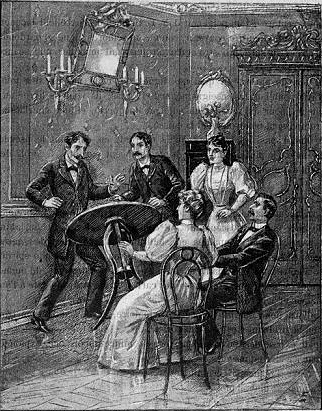
A term applied to those who allegedly have the ability, conscious or unconscious, to communicate with dead spirits, perform paranormal feats and channel the universal life force for healing; an individual qualified in some special manner to form a link between the living and the dead.
Mediumship is explained as a form of communication with spirits.
Mediums have been known by various names, such as oracle, soothsayer, wizard, cunning woman, wise woman, witch, medicine man, sorcerer, shaman, fortune-teller, witch doctor, mystic, priest, prophet, psychic, and channeler.
Mental mediumship uses techniques such as clairaudience or automatic writing to communicate, while physical mediumship involves rappings, apports, levitation, or movement of objects and other paranormal phenomena.
Mediums usually claim to communicate with spirits through one or more entities called 'controls' (or spirit guides), which usually remain permanently with the medium. Prevailing theory among parapsychologists holds that controls are not external spirits but secondary aspects of the medium's own personality that become externalized.
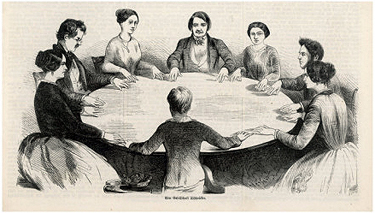
As a rule, most mediums have need of assistance for the production of their particular phenomena. It is said that the sitters of the circle often report feeling depleted of power after an episode.
See Altered State of Consciousness, ESP, Psychic Archaeology, Seance, Materialization, Asport, Rappings, Automatic Writing, Findhorn, Theosophy, Poltergeist, Mystic Gifts and Charms - New Age Gift Shop & Wicca and Pagan Supplies, Love Spells -- Use these powerful love spells to help you find and keep your true love, The Tarot Store, The Chakra Store, Divination & Scrying Tools and Supplies, Unique Amulets, Talismans, Good Luck Charms, and Love Tokens, Powerful Witch Doctor Spell Kits, Powerful Spells - Cast by Andreika the Witch, Webmasters Make $$$, AzureGreen - Celebrating All Paths to the Divine, ISIS - Tools for Your Soul's Journey, and The Pyramid Collection - Myth, Magick, Fantasy and Romance.
Sources: (1) Dictionary of the Occult, Caxton Publishing; (2) Spence, Lewis, An Encyclopedia of Occultism, Carol Publishing Group; (3) Shepard, Leslie A and Melton, J. Gordon (Editors), Encyclopedia of Occultism and Parapsychology, Gale Group; (4) Pickover, Clifford A., Dreaming the Future: The Fantastic Story of Prediction, Prometheus Books.
| | |







 .
. .
. .
.