Bath-kol
Alternatively Bath Qol, Bat Qol, Bat Kol and Bath Kol.
A prophetic voice of inspiration issuing from the spirit of Yahweh himself. Also the name of the holy guardian angel said to have visited in his cell the 2nd century sage Simeon ben Yohai, the reputed author of the Zohar. Nicholas Flamel, the notorious French alchemist, claimed guidance from this same angel, deemed to be the angel of prophecy, in his quest for the Philosopher's Stone.
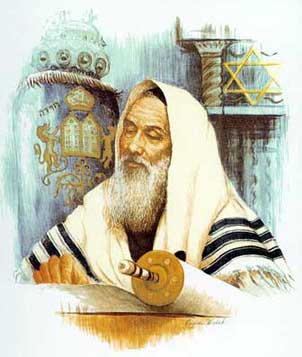
In the Talmud, Bath-kol was a heavenly or divine voice — a lower level of revelation than that of the Holy Spirit — specifically referring to the supernatural method of communicating and announcing God's Will to men, in particular when the Hebrew prophets had to come to an end.
"After the death of Haggai, Zechariah, and Malachi, the last of the prophets, the Holy Spirit ceased from Israel; nevertheless they received communications from God throught the medium of Bath Kol." (Tosifta Sot. XIII. 2)
Bath-kol in Hebrew mean approximately 'daughter of the voice', or 'echo'. It was believed to have been the means of ending the long conflict between the two great Rabbinic Schools.
Bath-kol was also the name used for what was probably a method of divination among the ancient Jews. It is said that the first words uttered after the appeal to Bath-kol were taken as being oracular.
See Divination, Acutomancy, Agalmatomancy, Coscinomancy, Cleidomancy, Augur, Stoichomancy, Dowsing, Tarot, Heptameron, Demonology, Sortilege, Idolomancy, Demonomancy, Tephramancy, Anemoscopy, Eromancy, Austromancy, Chaomancy, Roadomancy, Capnomancy, Pyromancy, Meteormancy, Ceraunoscopy, Zoomancy, Felidomancy, Mystic Gifts and Charms - New Age Gift Shop & Wicca and Pagan Supplies, Love Spells -- Use these powerful love spells to help you find and keep your true love, The Chakra Store, The Tarot Store, Divination & Scrying Tools and Supplies, Unique Amulets, Talismans, Good Luck Charms, and Love Tokens, Powerful Witch Doctor Spell Kits, Powerful Spells - Cast by Andreika the Witch, Webmasters Make $$$, AzureGreen - Celebrating All Paths to the Divine, ISIS - Tools for Your Soul's Journey, and The Pyramid Collection - Myth, Magick, Fantasy and Romance.
Sources: (1) Davidson, Gustav, Dictionary of Angels: Including the Fallen Angels, Free Press; (2) Cohen, Abraham, Everyman's Talmud: The Major Teachings of the Rabbinic Sages, Schocken; (3) Scholem, Gershom, On the Mystical Shape of the Godhead; Basic Concepts in the Kabbalah, Schocken; (4) Walker, Charles, The Encyclopedia of the Occult, Random House Value.
| | |








 .
. .
. .
.