Conjuration
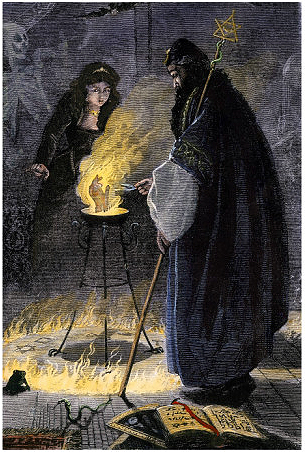
The practice of raising or evoking spirits, ghosts, demons and storms by means of carefully formulated rituals. Its practitioners are known as conjuretors.
These rituals take many different forms, many of them described in the grimoires, especially the Grand Grimoire, which contains probably the earliest printed account of the manufacture of pacts with demons.
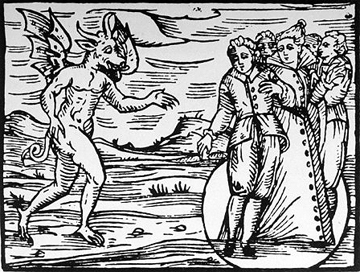
According to the prevalent view, the black magician is an individual who enlists the aid of Satan and/or his spawn, making pacts with these demons, promising his immortal soul in exchange for a lifetime of riches and gratifications or for a glimpse into the great mysteries of the cosmic order.
Also known as conjuring is the art of seeming to execute genuine magic; performers are known as conjurors. The art supposedly dates back to events that are said to have occurred 4500 years ago in Egypt, during the reign of Pharaoh Khufu (popularly known as Cheops), most likely the builder of the Great Pyramid at Giza. This art should not be mistaken for a paranormal performance; it uses sleight of hand, special props and equipment, secret technologies and many illusionary methods. Its only purpose is entertainment.
See Agrippa, Diviner, Divination, Wizard, Pythagoras, Witchcraft, Diviner, Witch, Warlock, Alchemy, Paracelsus, Devil, Kabbalism, Numerology, Astrology, Augur, Adjuration, Magic, Satan, Heptameron, Love Spells -- Use these powerful love spells to help you find and keep your true love, Unbroken Curses, Mystic Gifts and Charms - New Age Gift Shop & Wicca and Pagan Supplies, The Chakra Store, The Tarot Store, Divination & Scrying Tools and Supplies, Unique Amulets, Talismans, Good Luck Charms, and Love Tokens, Powerful Witch Doctor Spell Kits, Powerful Spells - Cast by Andreika the Witch, Webmasters Make $$$, AzureGreen - Celebrating All Paths to the Divine, ISIS - Tools for Your Soul's Journey, and The Pyramid Collection - Myth, Magick, Fantasy and Romance.
Sources: (1) Spence, Lewis, An Encyclopedia of Occultism, Carol Publishing Group; (2) Pickering, David, Cassell Dictionary of Witchcraft, Cassell Academic; (3) The Encyclopaedia Britannica Eleventh Edition Handy Volume Edition, Oxford University Press; (4) The Catholic Encyclopedia, The Encyclopedia Press; (5) Masello, Robert, Fallen Angels. . . and Spirits of the Dark, The Berkley Publishing Group.
| | |







 .
. .
. .
.