Extispicy
Alternatively known as Extispicium (also the name of one of the instruments used in the practice of it), Extispiciny, Splanchomancy (see Anthropomancy), Aruspicy, Aruspicina, Aruspiciny, Haruspicy, Haruspiciny, and Haruspication.
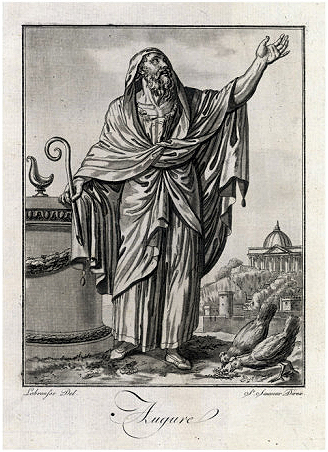
This form of divination is sometimes considered to be part of augury.
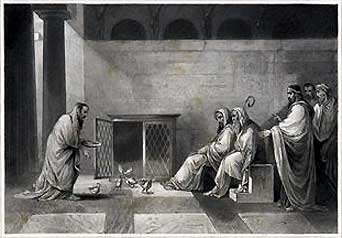
Extispicy is divination by means of the examination of the entrails of sacrificed animals, usually with special emphasis on the animal's liver, which afterwards were burnt in a sacrificial fire. Sometimes the observation of how the flame burnt the sacrifice was also necessary for the prognostication.
Surprisingly, in early Mesopotamia the most important and ancient form of divination was not by astronomical observations, which we can trace to the second millennium BC, but instead the observation of the entrails of sacrificed animals, especially the liver, but also heart, lungs, and colon.
So, of the many different forms of divination practiced in antiquity, liver divination was one of the earliest and was regarded as the most authoritative. Later on, other organs were also included and it became standard practice in civil administration when decisions of state had to be made, in military campaigns and also at critical junctures in the lives of those individuals who could afford it, to consult a diviner who would examine entrails. Such diviners were omnipresent in ancient Mesopotamian society.
From the third millennium BC, Extispicy was held as being more reliable than the observation of celestial bodies (Astrology) but also of other ominous phenomena (Augury), and was generally considered more dependable than the visions of prophets and ecstatics (Prophecy).
Extispicy's underlying theory was that when an animal — usually a sheep or an ox — was sacrificed, it was absorbed by the god to which it had been offered, creating a direct channel to the deity. By opening the carcass, the haruspex presumed to peek inside the god's mind and watch the future being created..
The practice of Extispicy came to the Greeks and Romans from the Etruscans and the earlier cultures of Babylonia and Assyria. The extispices of the Roman religious colleges were the aruspices or augurs.
This somewhat grisly ancient method of divination is still practiced today in remote parts of the world. For the Gurung, a farming people living in Nepal, the shape and color of a sacrificed chicken's lungs may foretell sickness or good fortune.
 | | | | |
| | |
| |
See Hieroscopy, Hieroscopia, Divination, Demonomancy, Scapulomancy, Haruspex, Radiesthesia, Astrology, Acutomancy, Agalmatomancy, Coscinomancy, Cleidomancy, Augur, Stoichomancy, Dowsing, Tarot, Heptameron, Demonology, Sortilege, Idolomancy, Tephramancy, Anemoscopy, Eromancy, Austromancy, Chaomancy, Roadomancy, Capnomancy, Pyromancy, Meteormancy, Ceraunoscopy, Zoomancy, Felidomancy, Horoscope, Horary Astrology, Zodiac, Numerology, Bibliomancy, Mystic Gifts and Charms - New Age Gift Shop & Wicca and Pagan Supplies, The Chakra Store, Love Spells -- Use these powerful love spells to help you find and keep your true love, The Tarot Store, Divination & Scrying Tools and Supplies, Unique Amulets, Talismans, Good Luck Charms, and Love Tokens, Powerful Witch Doctor Spell Kits, Powerful Spells - Cast by Andreika the Witch, Webmasters Make $$$, AzureGreen - Celebrating All Paths to the Divine, ISIS - Tools for Your Soul's Journey, and The Pyramid Collection - Myth, Magick, Fantasy and Romance.
| | | | |
| | |
| |
Sources: (1) Spence, Lewis, An Encyclopedia of Occultism, Carol Publishing Group; (2) Dictionary of the Occult, Caxton Publishing; (3) The Encyclopaedia Britannica Eleventh Edition Handy Volume Edition, Oxford University Press; (4) Bailey, Nancy (editor), The Little Giant Encyclopedia of Spells and Magic, Sterling Publishing; (5) Buckland, Raymond, The Fortune-Telling Book: The Encyclopedia of Divination and Soothsaying, Visible Ink Press; (6) Naydler, Jeremy, The Future of the Ancient World: Essays on the History of Consciousness, Inner Traditions Publishers.
| | |







 .
. .
. .
. .
. .
. .
.