Jelaleddin, Rumi (1207-1273)
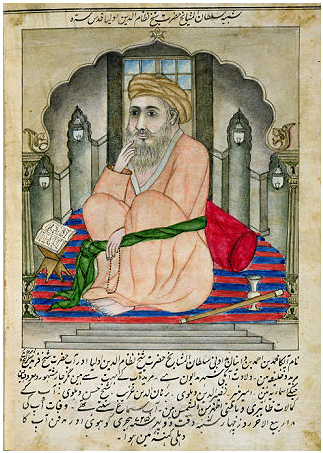
A Persian Sufi poet of the thirteenth century AD, also known as Jelaluddin Balkhi, and considered by many the greatest Oriental mystic.
Rumi, the Anatolian (as he was also known), taught the Sufi doctrine that the chief end of man is so to emancipate himself from human thoughts and wishes, human needs and the outward impressions of the senses, that he may become a mere mirror for the Deity. So refined an essence does his mind become that it is as nearly as possible nothing; yet while in this state it can, by a union with the Divine Essence, mysteriously became the All.
In his teachings Rumi declared that names and words must not be taken for the things they represent:
"Names thou mayst know ; go, seek the truth they name
Search not the brook, but heaven, for the moon."
Rumi wrote many exquisit lyrics. His greatest work was 'Masnavi', or 'Mathnawï', a large collection of double-rhymed verses containing ethical and moral precepts. He lived in Asia Minor at Iconium, modern Konya (Arabic Rum — hence his name), but was born in Balkh. He founded the Order of Dervishes, a Sufistic sect.
See The Essential Rumi, In Praise of Rumi, Light upon Light: Inspirations from Rumi, Rumi: In the Arms of the Beloved, Rumi Speaks Through Sufi Tales, Rumi: We Are Three: New Rumi Poems, Apollonius of Tyana, Alchemy, Archangels, Angels, Angelical Stone, Critomancy, Astrology, Acutomancy, Agalmatomancy, Divination, Coscinomancy, Cleidomancy, Augur, Stoichomancy, Dowsing, Tarot, Heptameron, Demonology, Sortilege, Idolomancy, Demonomancy, Tephramancy, Anemoscopy, Eromancy, Austromancy, Chaomancy, Roadomancy, Capnomancy, Pyromancy, Meteormancy, Ceraunoscopy, Zoomancy, Christianity, Satan, Mystic Gifts and Charms - New Age Gift Shop & Wicca and Pagan Supplies, Love Spells -- Use these powerful love spells to help you find and keep your true love, The Tarot Store, The Chakra Store, Divination & Scrying Tools and Supplies, Unique Amulets, Talismans, Good Luck Charms, and Love Tokens, Powerful Witch Doctor Spell Kits, Powerful Spells - Cast by Andreika the Witch, Webmasters Make $$$, AzureGreen - Celebrating All Paths to the Divine, ISIS - Tools for Your Soul's Journey, and The Pyramid Collection - Myth, Magick, Fantasy and Romance.
Sources: (1) Spence, Lewis, An Encyclopedia of Occultism, Carol Publishing Group; (2) Curtis, Thomas, A London Encyclopaedia or Universal Dictionary of Science, Nabu Press.
| | |




 .
. .
. .
.