Nephomancy
Also known as Neladoracht, Nephelomancy and Nephelomantia.
Derived from the Greek nephele ('a cloud') and manteia ('divination'), it is the art and practice of divining the past, the present and the future with the aid of clouds.
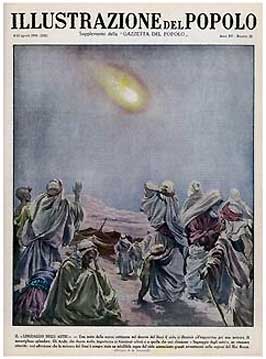
In Nephomancy prognostications were made by omens interpreted from the color, position in the sky and shape of a cloud or clouds formation.
Since time immemorial human kind has observed the heavens for signs from supreme beings and omens of things to come. Primitive minds believed that the clouds above, with their mysterious ever changing shapes, were messages sent by the gods. In some cultures, the clouds themselves were thought to be the divine entities. Prayers, libations, and sacrifices of all manners were made to placate them. An angry cloud god could send down his wrath in the form of destructive natural calamities, such as storms and flooding rains. However, the same clouds could also guide primitive man by imparting symbolic messages.
Damascius, known as the last of the Neoplatonists, tells that, during the reign of of Flavius Valerius Leo Augustus (emperor Leo I, 401 - 474 AD), there was a famous Nephomancer named Anthusa that lived in the empire:
"Wherefore one finds a woman in the days of Leo the Roman emperor who knew neither by sense of hearing nor by the ancient practices the art of divination by clouds. The woman came from Aigai in Cilicia, having come from the family of the Orestiadai who dwell on the mountain at Komana in Cappadocia. Her family went back to the Peloponnese. She took thought for a man entrusted with a military command who was sent with others to the war against the Vandals in Sicily. She prayed to foresee the future by dream and prayed facing the rising sun. Her father prescribed and commanded her in a dream to pray toward the west. When she prayed, a cloud from the upper air stood around the sun, and became enlarged and took the shape of a man. Another cloud sheared off and rendered itself of equal size and took the shape of a wild lion. It went into a great rage and, having made a great chasm, the lion swallowed the man. The human, cloud-made shape was like a Goth. A little more about the apparitions; Thereupon the emperor Leo slew Aspar himself, the hegemon of the Goths (in Constantinople) and his children. From that time Anthusa has continued until now without interruption to practice the custom of mantic predition through clouds."
Theodore Balsamon, the Greek Orthodox Church canonist in the 12th century, reported:
"They predict things unknown to many from the clouds. For some gaze the clouds, or rather, when they become fiery at sunset, feign to learn the truth from them. For this cloud, when it takes the shape of a dove, they say misfortune will come to the inquirer. From another cloud, when it takes the shape of a sword-bearing man, they predict war. From another, when it takes the shape of a lion, they predict the action of imperial edicts."
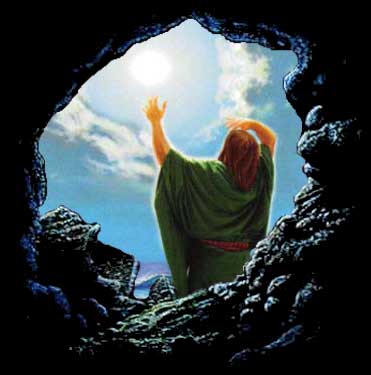
Cloud divination was extensively used by the Druids, who called it Neladoracht. When a king or queen wanted a glimpse of the future, the druid was dispatched to the summit of a nearby hill or mountain to consult the clouds, much as the augurs in ancient Rome gleaned insight by watching the flight of birds.
Celtic shamans sometimes practiced a form of Nephomancy that was closely related to Hydromancy and Scrying. After finding a hollowed stone or other depression that was filled with rain water, priests would look into it studying the clouds formations reflected on the water's surface.
To practice Nephomancy today, one should ask specific questions and then observe the shape and disposition of clouds. This is easy enough to do in most parts of the world and requires only a basic understanding of the forces involved.
Obviously to attempt the performing of Nephomancy you need a day when the sky is clear and cloudy, a day when the sky is sufficiently clear to define the shapes of the clouds. If a wind is present to keep them moving, so much the better. You also need to have a question or issue, a purpose for the inquiry. Do not ask about frivolous things to test the oracle, but instead ask about something you really need help with, a problem you have not been able to resolve. Treat it with respect and you will receive a response you can respect.
You do not have to, but laying on the ground will provide a better view of the sky and also be a lot more comfortable. If you do not want to lay on the ground, find a pool or fill a dish or bowl with some water, so you'll be able to see the sky reflected in the liquid, like a mirror. This will also be advantageous for the 'reading', as it will limit the field of observation for the prognostication.
Next, close your eyes and try clearing your mind of all distracting thoughts. When you feel ready, open your eyes and scan the sky for cloud forms. It is really important that you do not try to force the shapes you see to fit the answer to your question. Sometimes the clouds will offer shapes that have nothing at all to do with your query. The secret is to be patient, being sensitive to the moment you can gradually define the reading until it becomes clear. If you feel you did not receive an answer, wait a while and try again, always being careful to phrase the question as exactly as possible.
Signs are usually open to more than one interpretation. Be also attentive to minor shapes in your field of vision, instead of concentrating solely on the obvious ones. The position of the clouds also have meaning: are they low or high on the horizon, are they traveling south, north, east or west? What kind of clouds are they? Thick, thin, wispy, heavy, full of rain?
When you have finished, clearly define this by thanking the oracle-clouds and taking a few moments to consider the answers received. In time you will notice that you will have improved your cloud reading skills.
Nephomancy is a form of Aeromancy.
See Acutomancy, Divination, Coscinomancy, Cleidomancy, Augur, Stoichomancy, Dowsing, Tarot, Heptameron, Demonology, Sortilege, Demonomancy, Tephramancy, Anemoscopy, Eromancy, Austromancy, Chaomancy, Roadomancy, Capnomancy, Pyromancy, Meteormancy, Ceraunoscopy, Scrying, Hydromancy, Druids, Mystic Gifts and Charms - New Age Gift Shop & Wicca and Pagan Supplies, Love Spells -- Use these powerful love spells to help you find and keep your true love, The Tarot Store, The Chakra Store, Divination & Scrying Tools and Supplies, Unique Amulets, Talismans, Good Luck Charms, and Love Tokens, Powerful Witch Doctor Spell Kits, Powerful Spells - Cast by Andreika the Witch, Webmasters Make $$$, AzureGreen - Celebrating All Paths to the Divine, ISIS - Tools for Your Soul's Journey, and The Pyramid Collection - Myth, Magick, Fantasy and Romance.
 | | | | |
| | |
| |
Sources: (1) Dunwich, Gerina, A Wiccan's Guide to Prophecy and Divination, Carol Publishing Group; (2) Dictionary of the Occult, Caxton Publishing; (3) Spence, Lewis, An Encyclopedia of Occultism, Carol Publishing Group; (4) Morwyn, The Complete Book Of Psychic Arts, Llewellyn Publications; (5) Walker, Charles, The Encyclopedia of the Occult, Random House Value; (6) Johnstone, Jane, and Pilkington, Maya (editors), The Little Giant Encyclopedia of Fortune Telling, Sterling; (7) Trombley, Frank R., Hellenic Religion and Christianization, Brill Academic Publishers; (8) Matthews, John, Wizards: The Quest for the Wizard from Merlin to Harry Potter, Barron's Educational Series Publishers.
| | |





 .
. .
. .
. .
. .
. .
.













 Change Your Life!